The Nature of
Evidence #1
The trials of Lindy Chamberlain, 1984-1998
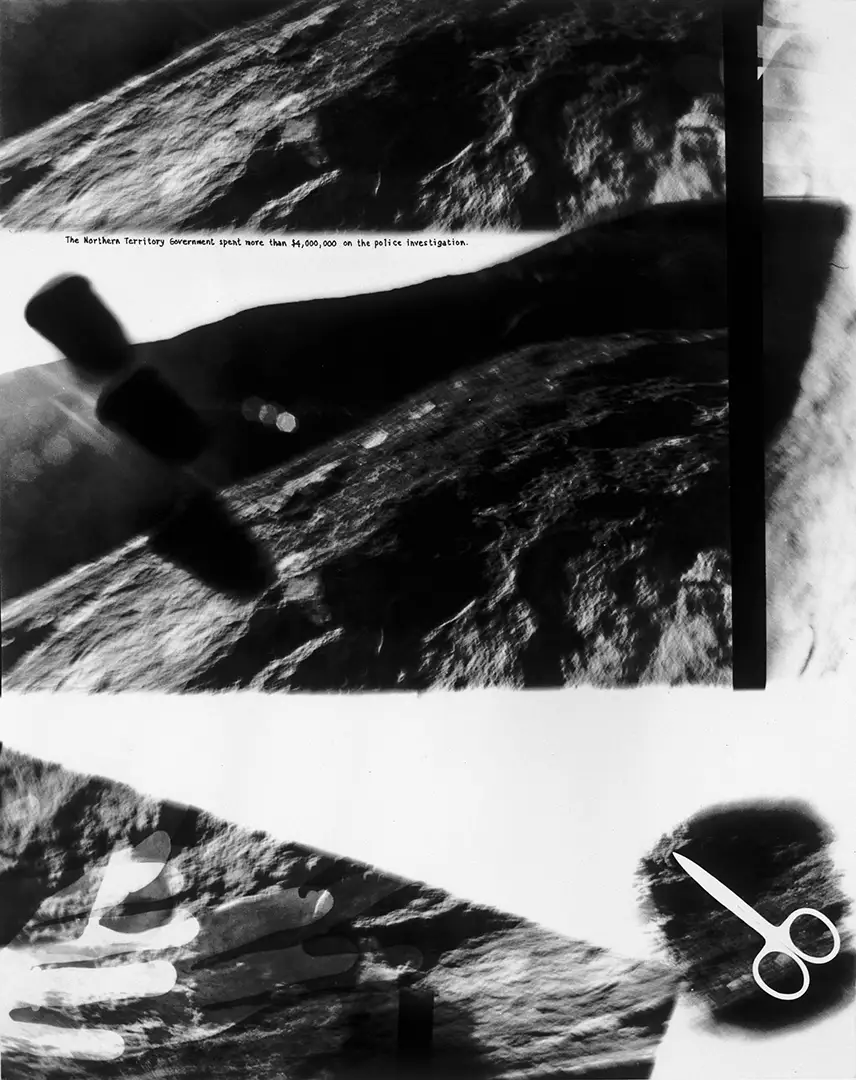
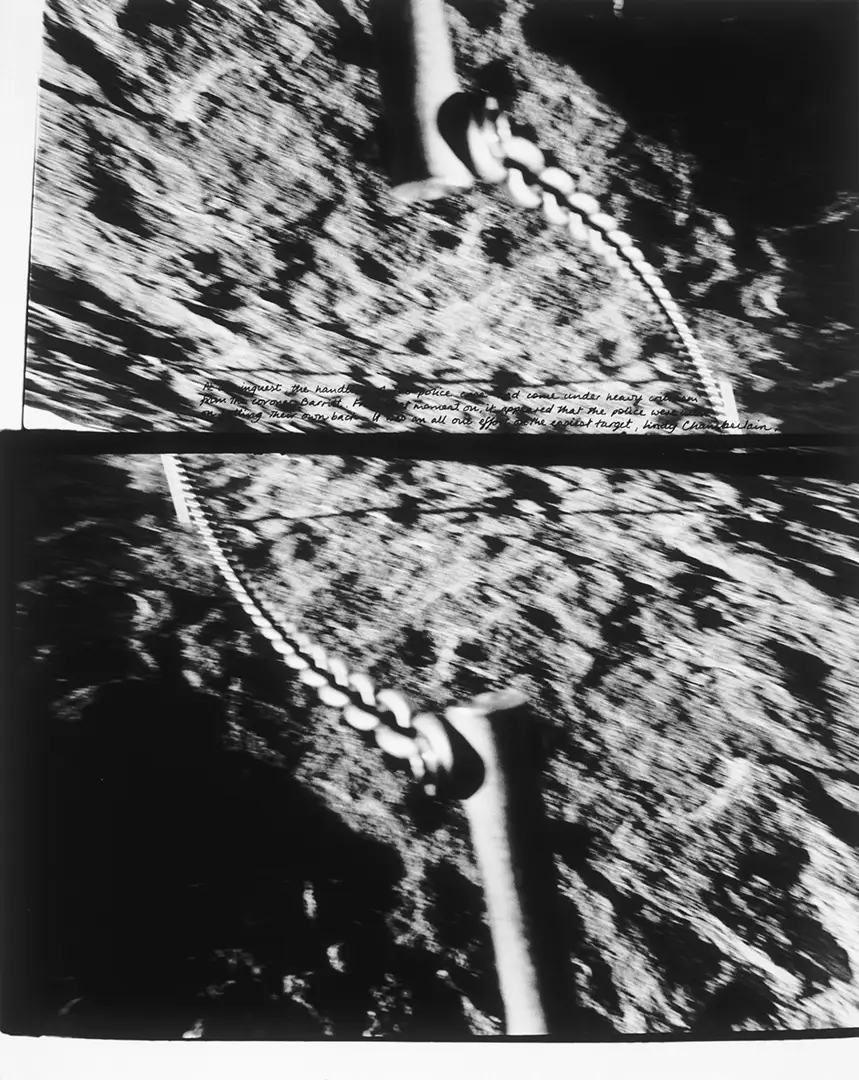
Unique photographic images – 28 silver-gelatin prints, mounted on aluminium.
Images created in the darkroom from varied sources including film, objects and light.
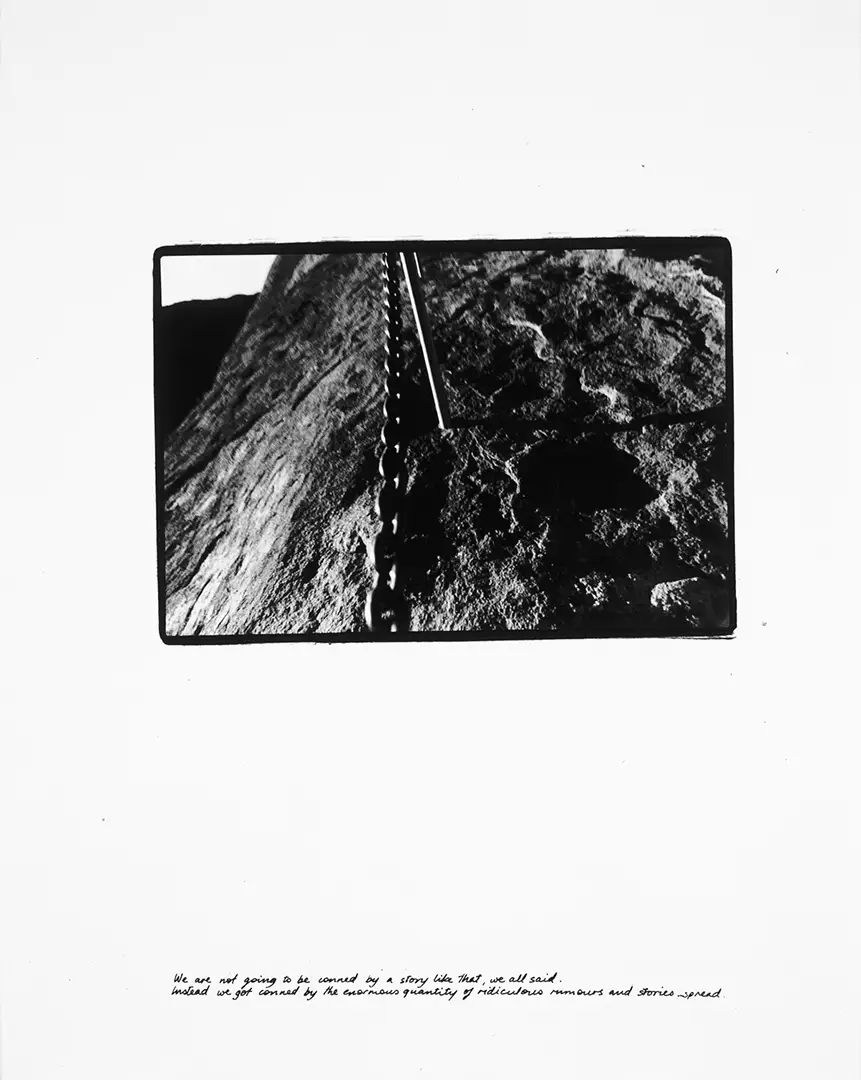
In the evening of 17th August 1980, in the campground by the great natural monument, Uluru, in central Australia, a nine-week-old, sleeping baby was taken from her tent by a dingo. The dingo stepped over the baby’s brother, wrestled her out of her baby-capsule and ran off into the dark with the child in its teeth. The child’s mother glimpsed the dingo and shouted, ‘the dingo’s got my baby!’
Not all the child’s clothing was found at that time, and critically, the baby was not found either. This shocking event became a massive national story that confused prejudice, guesswork, falsehoods, hearsay, hate, bias and emotion with fact. In October 1982, the child’s mother, Lindy Chamberlain, was sentenced to life imprisonment for the murder of her dear baby daughter, Azaria.
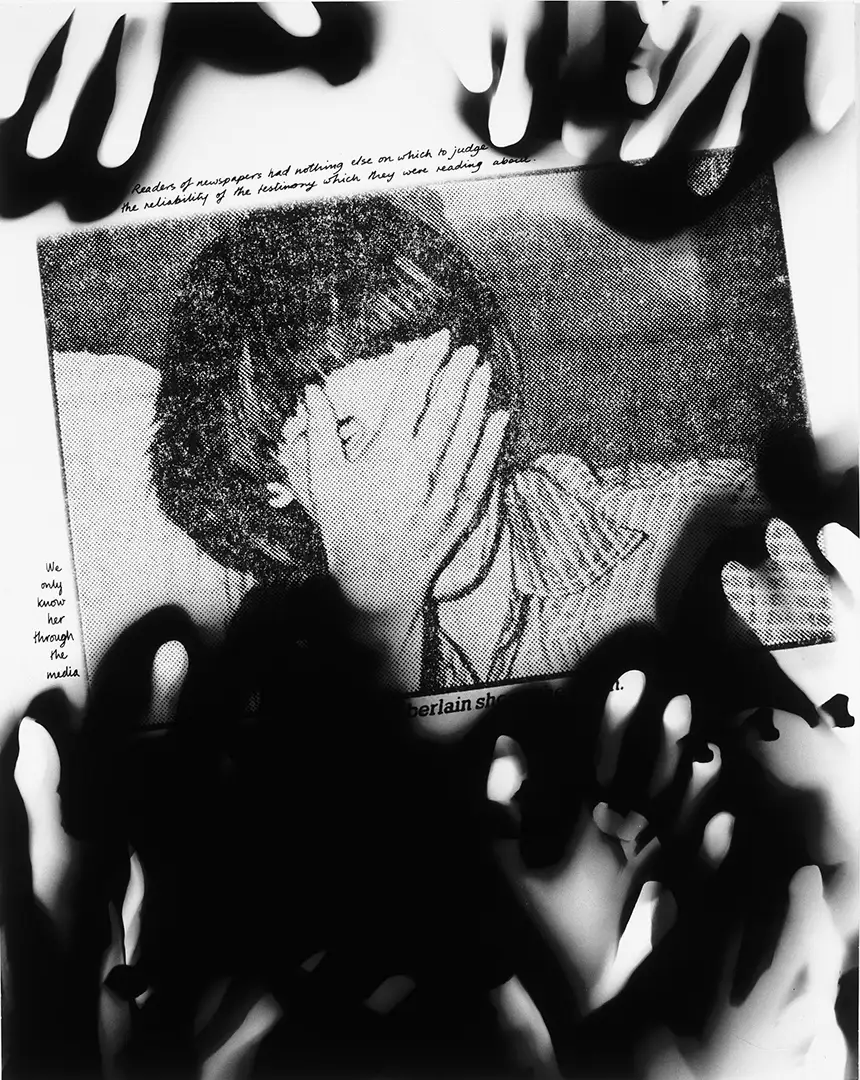
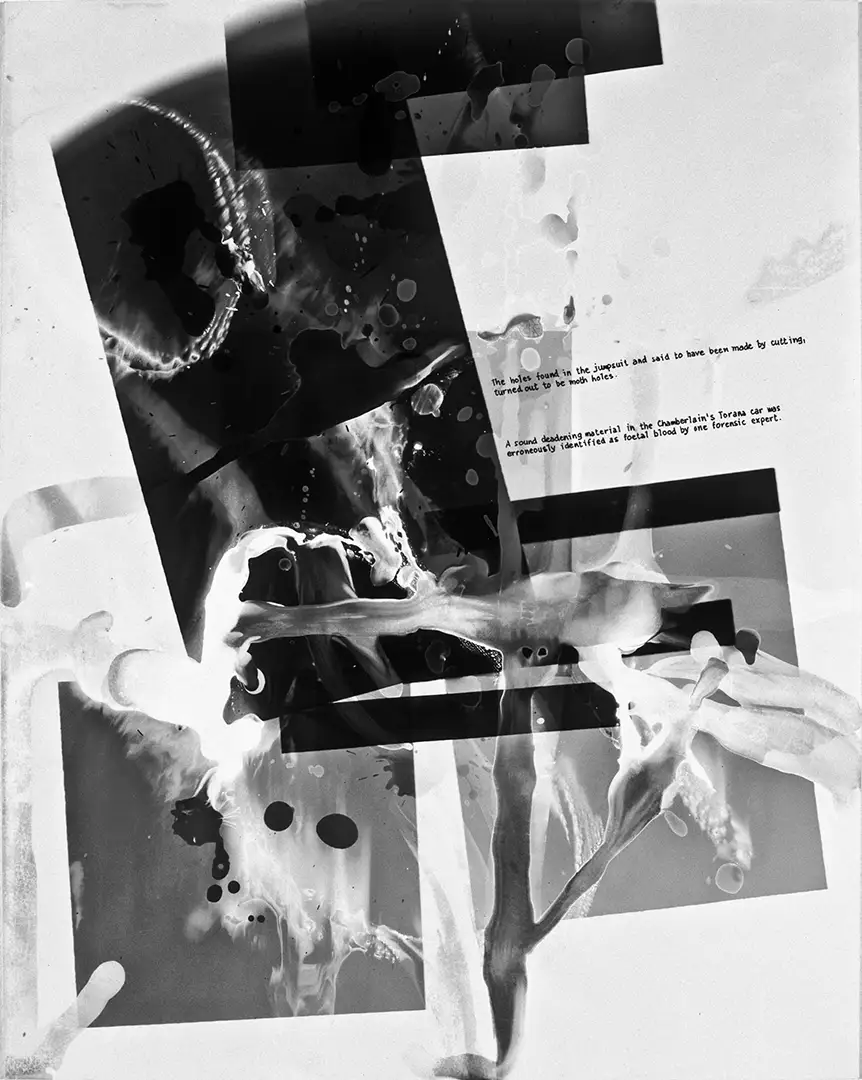
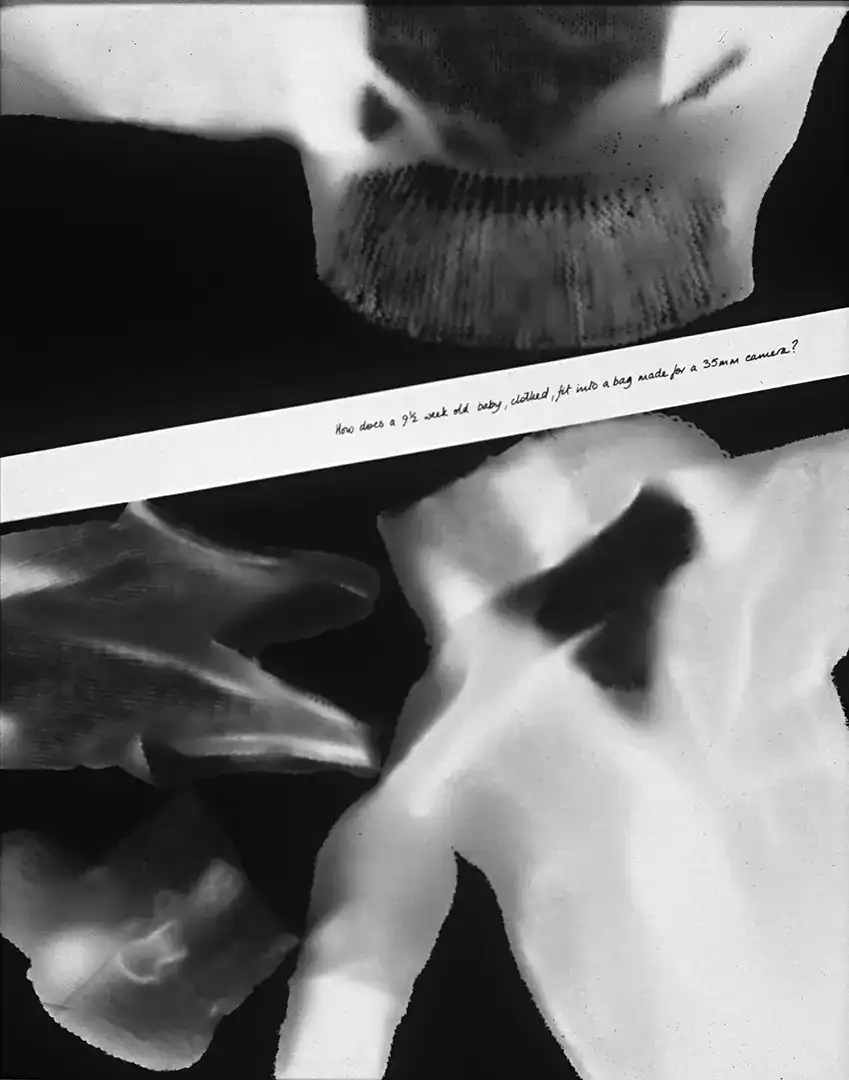
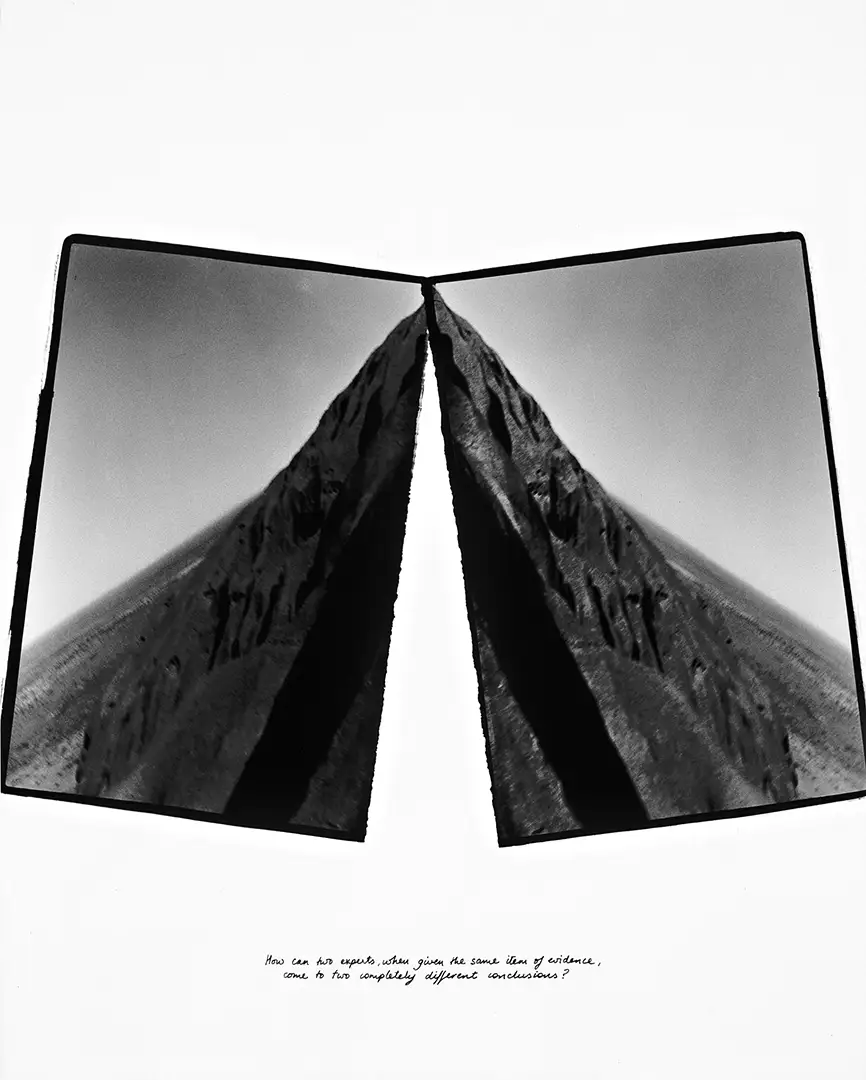
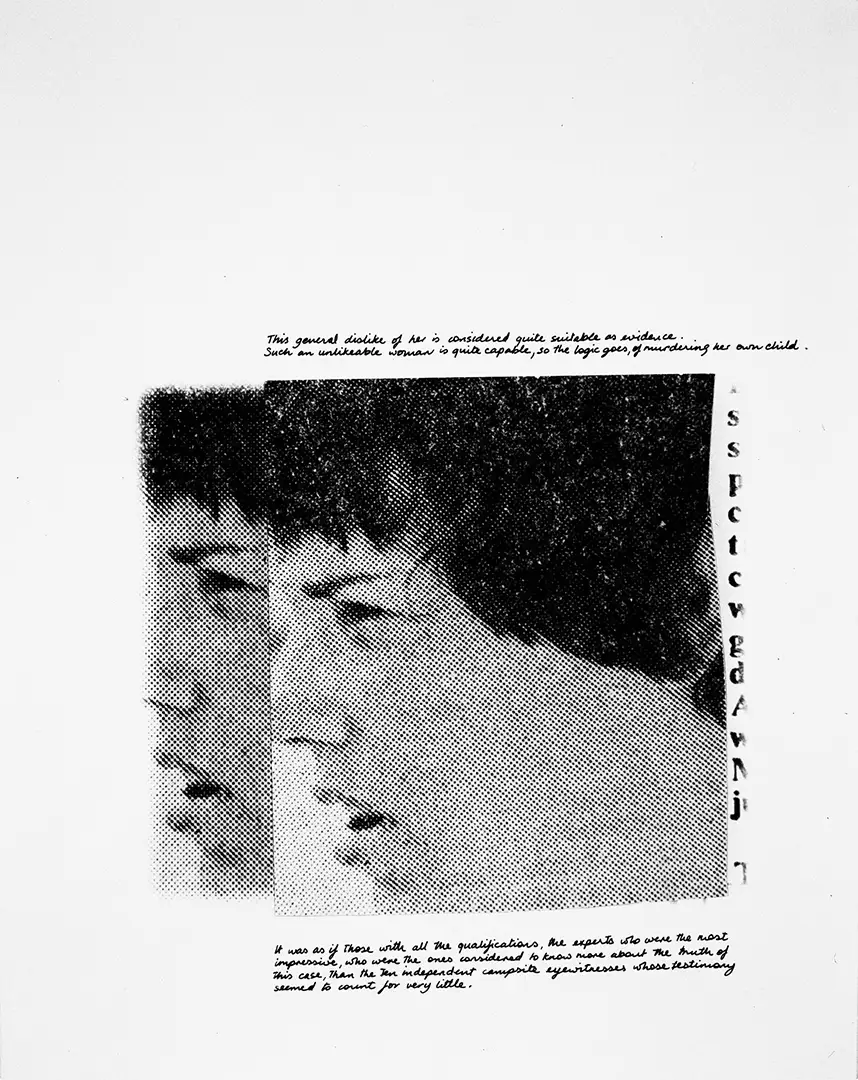
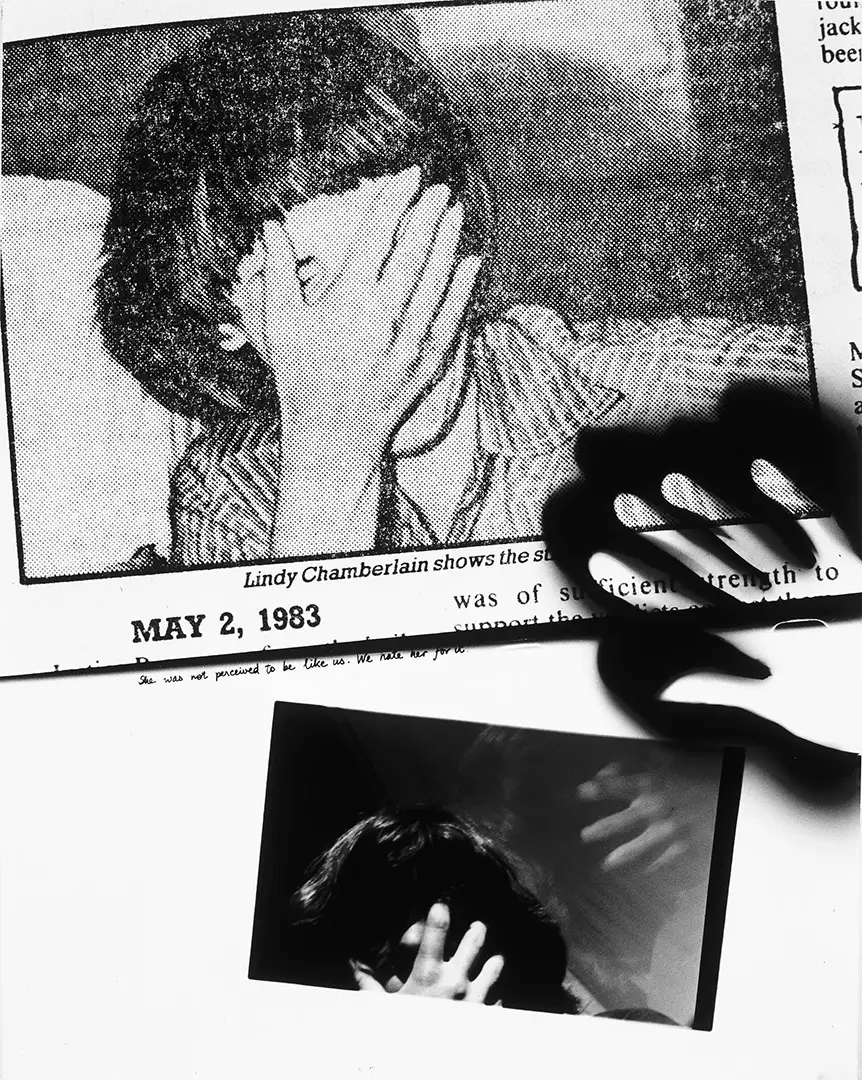
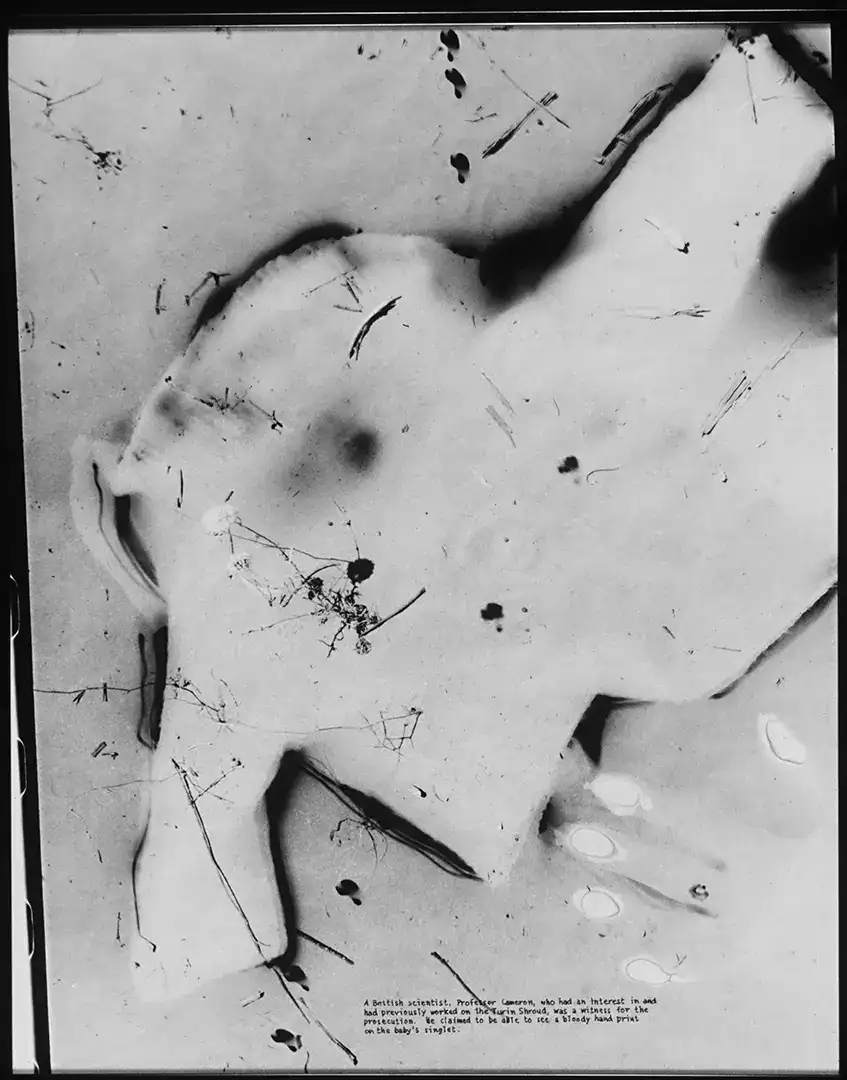
Photography played an integral part in the vast collection of perceived evidence used against Lindy Chamberlain. There were photographs of ‘evidence’ taken after it had been disturbed by the photographer; photographs misinterpreted – such as of a tiny knitted jacket with dingo teeth holes that were explained by and ‘expert’ as scissor cuts; and manufacturer’s sound deadener chemicals in the family car (also wrongly) interpreted as foetal blood spray; photographs of an item of clothing presented as displaying a small (and, in this scenario, therefore, female) bloody, ‘hand print’ – much like the body of Christ apparently imprinted on the fabric of the Shroud of Turin; photographs not revealed due to fear that the photographer’s camera would be confiscated by the police; photographs which should have been taken of what would have been vital evidence but were not – such as dingo footprints and other disturbances in the sand. Photographs were used both as evidence and to deny evidence. There were thousands of published, media photographs taken of Lindy Chamberlain herself, always accompanied with an interpretation or explanation of the image telling viewers what to ‘see’ in the photograph, that this was evidence of a guilty woman. Her face both haunted and flooded the media – for which she herself was blamed.
Popular opinion held that she looked like a murderer. But what does a murderer look like? Can a photograph exposed in a mere 1/500th of a second convey something so critical about anyone?In 1986 Justice Trevor Morling headed up a royal commission into the Chamberlains’ convictions. I attended some sessions when it was in Sydney. Photography was not permitted, so I drew some of the protagonists. Photographs continued to be important to the production of evidence and meaning in this story of the awful death of a tiny human by a dingo in the vast central Australian desert. Professionally made 10” x 8” colour photographic prints presented to this final Inquest were again carefully explained and interpreted to witnesses and the judge.
The Chamberlains were exonerated, finally, in 1988.